The Latest Trends in LED Lamp Design: What Does the Future of Lighting Hold?
The world of lighting has undergone a dramatic transformation in the past decade, with LED lamp design leading the charge. From humble beginnings as simple, energy-efficient replacements for incandescent bulbs, LEDs have evolved into the centerpiece of innovative lighting design. As we move deeper into the 2020s, the convergence of technology, sustainability, and aesthetics is creating a new era in lighting. So, what are the latest trends in LED lamp design, and what might the future of lighting look like? Let’s explore the cutting-edge developments shaping the next generation of illumination.
Smart LED Lamps: Integrating Intelligence and Connectivity
One of the most significant trends in LED lamp design is the integration of smart technology. According to Statista, the global smart lighting market is expected to exceed $44 billion by 2030, a substantial leap from just $11 billion in 2021. Modern LED lamps are no longer just sources of light—they are hubs of connectivity and intelligence.
Today’s smart LED lamps can be controlled via smartphone apps, voice assistants like Alexa or Google Home, and even automated schedules. Users can fine-tune brightness, color temperature, and even color itself to match their mood or activity. Some advanced models feature adaptive lighting, which dynamically adjusts the light output throughout the day to mimic natural daylight, supporting circadian rhythms and improving well-being.
.png)
For example, Philips Hue and LIFX offer LED lamps that can sync with music, movies, or even the weather. This level of integration is made possible by the rise of the Internet of Things (IoT), which allows lighting to become part of a larger smart home ecosystem. As 5G and Wi-Fi 6 become more widespread, expect even faster, more reliable connectivity for smart LEDs, making seamless automation a reality.
Sustainable Materials and Circular Design in LED Lamps
Sustainability is at the heart of the latest LED lamp trends. While LEDs are inherently more energy efficient—using up to 80% less energy than incandescent bulbs—manufacturers are now focusing on sustainable materials and circular design principles.
A growing number of brands are using recycled plastics, metals, and even biodegradable materials in lamp construction. For instance, IKEA’s SOLHETTA LED range incorporates at least 20% recycled materials. Likewise, companies like Signify (formerly Philips Lighting) have committed to making their products fully recyclable, with take-back programs to ensure responsible end-of-life disposal.
Circular design is about creating products that are easy to repair, upgrade, and recycle. Modular LED lamps—where components like drivers, bulbs, and diffusers can be replaced individually—are gaining traction. This approach not only extends product lifespan but also reduces electronic waste, which is crucial considering that global e-waste reached 53.6 million metric tons in 2019, according to the United Nations.
Human-Centric Lighting: Enhancing Well-Being with LEDs
Another major trend in LED lamp design is the focus on human-centric lighting (HCL). HCL seeks to optimize lighting for human health, comfort, and productivity by mimicking the natural changes in daylight.
Research published in the Journal of Clinical Sleep Medicine has shown that exposure to blue-enriched light during the day can increase alertness and cognitive performance, while warmer tones in the evening promote relaxation and better sleep. Modern LED lamps now offer tunable white technology, allowing users to shift color temperature from cool daylight (around 6500K) to warm white (as low as 2200K) throughout the day.
Schools, hospitals, and offices are increasingly adopting HCL-enabled LED lamps to support well-being. For example, Germany’s Fraunhofer IBP found that classrooms with dynamic LED lighting saw a 35% improvement in reading speed and a 45% reduction in errors among students. In the workplace, human-centric lighting has been linked to higher productivity and reduced absenteeism.
Bold Aesthetics and Customization: Form Meets Function
LEDs have unlocked a world of possibilities in lamp design, allowing for bold aesthetics and unprecedented customization. Unlike traditional bulbs, LEDs are compact, cool-running, and flexible, enabling designers to create lamps in imaginative shapes and sizes.
Current design trends include ultra-minimalist fixtures, sculptural forms, and lamps that double as decorative art pieces. Some designers use flexible LED strips to create flowing, organic shapes, while others embed LEDs in transparent or translucent materials for a floating, ethereal effect.
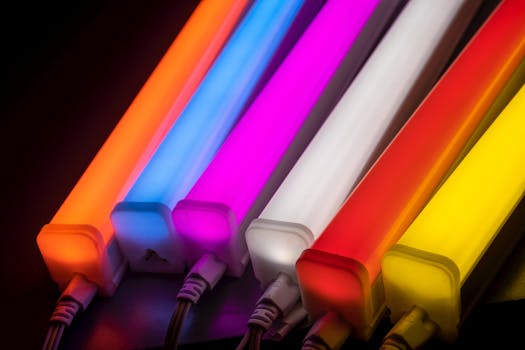
Customization is also a key driver. Consumers can now choose from a palette of millions of colors, adjust the intensity and direction of light, and even design their own lamps using modular components. Companies like Nanoleaf and Yeelight offer modular LED panels that users can arrange into unique geometric patterns, blending lighting and wall art.
Here’s a comparison of traditional vs. modern customizable LED lamp features:
| Feature | Traditional Lamps | Modern Customizable LED Lamps |
|---|---|---|
| Color Options | One or two | 16 million+ |
| Shape/Design | Fixed, limited | Modular, flexible, artistic |
| Control | On/Off switch | App, voice, automation |
| Brightness Adjustment | Rare, basic dimming | Fine-tuned, programmable |
| Integration | Standalone | Smart home, IoT |
OLED and Micro-LED: The Next Generation of Lamp Technology
While LEDs dominate the current market, emerging technologies like OLED (Organic Light Emitting Diode) and Micro-LED are starting to influence lamp design. These technologies promise even greater efficiency, flexibility, and new design possibilities.
OLED panels emit light over a broad area and can be produced on flexible substrates, enabling ultra-thin, bendable lamps. They produce soft, glare-free light that’s easy on the eyes, making them ideal for ambient and decorative applications. LG Display has already launched OLED lamp panels as thin as 0.41 mm, and their luminous efficacy has reached 100 lumens per watt, rivaling top-tier LEDs.
Micro-LEDs, on the other hand, pack millions of microscopic LEDs into a small area, offering exceptional brightness, color accuracy, and lifespan with virtually no burn-in. While still expensive for general lighting, Micro-LED technology is advancing rapidly and could soon lead to lamps that combine the best of both form and function.
Predicting the Future: What’s Next for LED Lamp Design?
The trajectory of LED lamp design points toward a future where lighting is seamlessly integrated into our environments, responsive to our needs, and sustainable by design. Some key predictions for the next decade include:
- Fully autonomous lighting: With AI and advanced sensors, lamps will automatically adjust intensity, color, and direction based on real-time data about occupancy, daylight, weather, and user preferences. - Universal integration: Lighting will become a core part of building management systems, working in harmony with HVAC, security, and energy management for maximum efficiency. - Health-centric features: Ultraviolet (UV-C) LEDs are being explored for their ability to disinfect surfaces and air, offering built-in sanitization for homes, hospitals, and public spaces. - Artistic and immersive experiences: Lighting will be used to create immersive environments, from interactive walls to mood-enhancing ceilings, transforming how we experience spaces. - Net-zero lighting: With continued advances in efficiency and renewable energy integration, the carbon footprint of LED lamps will approach zero, contributing to global climate goals.Final Thoughts on the Future of LED Lamp Design
LED lamp design is evolving at a breathtaking pace, driven by innovation in technology, sustainability, and aesthetics. Whether it’s smart home integration, human-centric lighting, sustainable materials, or the emergence of OLED and Micro-LED, the future of lighting promises to be brighter, smarter, and more beautiful than ever. As consumers and designers alike seek out lighting solutions that do more than just illuminate, LED lamps are set to become an integral part of our connected, healthy, and creative lives.