LED lighting has become a cornerstone of modern energy efficiency, transforming the way homes, businesses, and cities illuminate their spaces. While many people know that LEDs use less electricity than traditional bulbs, fewer understand the real-world impact these lights have on energy savings — or how to maximize those benefits. In this article, we’ll dive deep into how LED lighting contributes to energy savings, explore practical tips for getting the most out of your LEDs, and offer expert recommendations to help you cut costs and boost efficiency.
The Science Behind LED Energy Efficiency
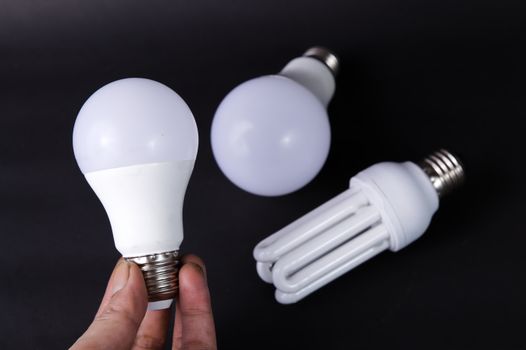
To appreciate how LED lighting saves energy, it’s useful to understand what sets it apart from older technologies. Traditional incandescent bulbs work by heating a metal filament until it glows, which wastes a significant amount of energy as heat. Compact fluorescent lamps (CFLs) are more efficient, but they still lose energy to heat and contain small amounts of mercury.
LEDs, or light-emitting diodes, generate light through electroluminescence — a process where electrical current passes through a semiconductor, emitting photons. This method is remarkably efficient and produces far less heat. According to the U.S. Department of Energy, LEDs use at least 75% less energy and last up to 25 times longer than incandescent lighting.
.png)
Key scientific advantages of LEDs include:
- Higher luminous efficacy: LEDs convert more electricity into visible light; typical LED bulbs deliver 80-100 lumens per watt, compared to 10-17 lumens per watt for incandescent bulbs. - Minimal heat waste: LEDs emit very little infrared radiation, reducing cooling costs in indoor environments. - Directional lighting: LEDs focus light where it’s needed, decreasing wasted illumination on ceilings and walls.Quantifying Savings: Real-World Examples
Switching to LED lighting is not just a theoretical improvement — it’s a proven way to reduce energy bills. Let’s break down the numbers with a practical example:
Suppose a household replaces ten 60-watt incandescent bulbs with 10-watt LED equivalents. Each LED provides similar brightness but consumes much less energy. If each bulb is used for five hours per day, here’s the annual energy consumption and cost comparison (assuming an average electricity rate of $0.16/kWh):
| Bulb Type | Watts per Bulb | Total Watts (10 Bulbs) | Annual kWh Used | Annual Cost |
|---|---|---|---|---|
| Incandescent | 60 | 600 | 1,095 | $175.20 |
| LED | 10 | 100 | 182.5 | $29.20 |
By switching to LEDs, this household could save over $145 per year on lighting alone. Multiply that across thousands of homes, and the community savings become massive. In fact, the U.S. Energy Information Administration reports that if every American household replaced just one incandescent bulb with an LED, the nation would save enough energy to power more than 3 million homes for a year.
Beyond Bulb Replacement: Strategic LED Lighting Upgrades
While swapping out old bulbs for LEDs is the fastest way to save, there are several advanced strategies to amplify your energy savings:
1. $1: Smart LEDs allow you to automate schedules, dim lights remotely, and use occupancy sensors to ensure lights are only on when needed. Studies show that integrating smart controls can boost lighting energy savings by an additional 35%. 2. $1: Instead of relying on a single overhead fixture, use LED task lighting, accent lights, and ambient lighting. This targeted approach lets you illuminate only the spaces in use, further reducing wasted energy. 3. $1: In commercial settings, upgrading entire lighting fixtures (not just bulbs) to integrated LED panels can improve efficiency and light quality. Many LED fixtures include advanced optics and thermal management, increasing longevity and reducing maintenance costs. 4. $1: Combine LED lighting with daylight harvesting systems — sensors that adjust artificial lighting based on available natural light. This can cut lighting energy use by 20-60% in offices and schools.Practical Tips for Maximizing LED Energy Savings
Getting the most from your LED investment isn’t just about buying bulbs. Here are actionable tips to maximize your savings:
- $1: Match LED lumens to your needs. Over-lighting a space wastes energy, while under-lighting leads to discomfort. Look for “warm white” (2700K-3000K) for living areas and “cool white” (4000K-5000K) for kitchens or workspaces. - $1: Not all LEDs are dimmable, so select compatible models if you want variable brightness. Motion or occupancy sensors are perfect for hallways, closets, and bathrooms, ensuring lights are never left on unnecessarily. - $1: Dust and dirt can reduce light output. Clean LED fixtures regularly to preserve efficiency, and check for software updates if using smart bulbs. - $1: CFLs and fluorescent tubes contain small amounts of mercury and should be disposed of at a recycling center. LEDs are safer and easier to recycle, contributing to environmental savings beyond energy use. - $1: Many utilities offer rebates for upgrading to LED lighting, reducing upfront costs and speeding up your return on investment.Commercial and Municipal Benefits: LEDs at Scale
Businesses, schools, and cities stand to gain the most from large-scale LED adoption. For example:
- $1: According to the U.S. Department of Energy, commercial buildings can slash lighting energy use by up to 60% by converting to LED systems with advanced controls. - $1: New York City’s conversion of 250,000 streetlights to LEDs is projected to save $14 million in annual energy and maintenance costs. - $1: High-bay LED fixtures can reduce warehouse lighting costs by 50-80%, while improving visibility and safety.Additionally, these organizations benefit from reduced maintenance, as LEDs last 15-25 years in typical use, compared to 1-2 years for incandescent bulbs. The reduced frequency of replacements translates to lower labor costs and less disruption.
Environmental Impact: LEDs and the Bigger Picture
The energy savings from LEDs translate directly into environmental benefits. Each kilowatt-hour (kWh) of electricity saved prevents about 0.92 pounds of carbon dioxide emissions (based on U.S. EPA data). If every U.S. household switched to LEDs, annual carbon emissions could be cut by more than 9 million metric tons — the equivalent of taking 2 million cars off the road.
LEDs are also mercury-free, unlike CFLs and fluorescent tubes, making them safer for both people and ecosystems. Their longer lifespan means fewer bulbs end up in landfills, reducing waste and resource extraction.
Final Thoughts on LED Lighting and Energy Savings
LED lighting is more than just a trend — it’s a fundamental shift in how we use energy. From the homeowner looking to lower monthly bills to the city planner aiming for sustainability, the benefits of LEDs are clear: massive energy savings, reduced environmental impact, and improved lighting quality.
By understanding the science behind LEDs, quantifying real-world savings, and following best practices for installation and use, anyone can maximize the advantages of this technology. Whether you’re upgrading a single room or an entire campus, LED lighting is one of the smartest investments you can make for your wallet and the planet.