LED Lighting and Its Role in Reducing Carbon Footprint: Shedding Light on a Greener Future
As the world faces the urgent challenge of climate change, every sector is seeking ways to reduce its environmental impact. Lighting, a basic necessity in our homes, workplaces, and public spaces, accounts for a significant share of global energy consumption. Traditional lighting methods, particularly incandescent and fluorescent bulbs, have long been major contributors to greenhouse gas emissions due to their high energy requirements. In recent years, however, LED (light-emitting diode) lighting has emerged as a transformative solution, offering not only improved efficiency and cost savings but also a powerful means to reduce carbon footprints worldwide. This article explores the science, benefits, and broad-reaching impacts of LED lighting in helping to combat climate change.
The Global Lighting Footprint: Why Efficiency Matters
Lighting is often taken for granted, but its cumulative environmental impact is immense. According to the International Energy Agency (IEA), lighting accounts for approximately 15% of global electricity use. In 2023, this translated to around 3,000 terawatt-hours (TWh) of electricity consumption worldwide—enough to power nearly 270 million average U.S. homes for a year.
.png)
Traditional incandescent bulbs convert only about 5-10% of the energy they consume into visible light, with the rest lost as heat. Fluorescent lights perform better but still waste considerable energy. Much of the electricity powering these lights comes from fossil fuel sources, which emit carbon dioxide (CO2) and other greenhouse gases.
Reducing the energy demand for lighting is critical to shrinking our overall carbon footprint. This is where LED technology steps in as a game-changer.
How LED Lighting Works: The Science Behind the Savings
LEDs, or light-emitting diodes, generate light through a process called electroluminescence. When an electric current passes through a semiconductor material in the diode, it emits photons — the particles that make up light. This process produces very little heat, making LEDs far more efficient than their incandescent or fluorescent counterparts.
Key scientific advantages of LEDs:
- $1: LEDs use up to 85% less energy than incandescent bulbs and about 40% less than most compact fluorescent lamps (CFLs). - $1: An average LED bulb lasts 15,000 to 50,000 hours—up to 25 times longer than incandescents and 3-5 times longer than CFLs. - $1: LEDs emit light in a specific direction, reducing losses and making them ideal for targeted applications.These properties translate directly to energy savings, fewer bulb replacements, and a smaller carbon footprint.
Environmental Impact: From Production to Disposal
The carbon footprint of any product includes all emissions generated throughout its lifecycle, from production and use to disposal. LEDs outperform traditional lighting on nearly every front:
1. $1: While the production of LED bulbs can be slightly more energy-intensive than incandescent bulbs due to advanced components, the higher efficiency and extended lifespan of LEDs more than compensate for this initial impact. 2. $1: Since LEDs use significantly less electricity, and much of global electricity still comes from fossil fuels, every watt saved translates to less CO2 released into the atmosphere. 3. $1: Longer lifespans mean fewer bulbs end up in landfills. Moreover, LEDs do not contain hazardous materials like mercury, which is present in CFLs and fluorescent tubes.According to the U.S. Department of Energy, widespread use of LED lighting in the United States could save approximately 348 TWh of electricity by 2027—equivalent to the annual output of 44 large power plants and a reduction of 246 million metric tons of CO2 emissions.
Comparing LED with Traditional Lighting: The Numbers
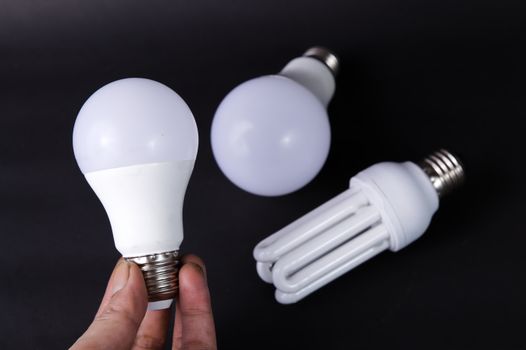
To appreciate the impact of LEDs, it helps to see how they stack up against older technologies in terms of energy use, lifespan, and emissions. The following table summarizes key differences:
| Lighting Type | Typical Wattage (for 800 lumens) | Average Lifespan (hours) | CO2 Emitted per Year (per bulb, avg. US grid) | Contains Hazardous Materials? |
|---|---|---|---|---|
| Incandescent | 60W | 1,200 | ~220 kg | No |
| CFL | 13-15W | 8,000 | ~50 kg | Yes (Mercury) |
| LED | 8-10W | 25,000+ | ~30 kg | No |
The numbers are compelling. An LED bulb providing the same brightness as a 60W incandescent uses just 8-10W, slashing annual emissions by up to 86%. Multiply this savings by billions of bulbs worldwide, and the potential for carbon reduction is enormous.
Case Studies: LED Lighting’s Real-World Carbon Impact
Many cities, companies, and organizations have already made the switch to LED lighting with impressive results:
- $1: The city replaced over 215,000 streetlights with LEDs, reducing energy use by more than 60% and decreasing annual CO2 emissions by 47,000 metric tons—the equivalent of taking 10,000 cars off the road. - $1: A retrofit to LED lighting led to an annual reduction of approximately 4,400 metric tons of CO2 and a 68% reduction in lighting energy consumption. - $1: By distributing more than 360 million LED bulbs across the country, India reduced carbon emissions by an estimated 39 million tons annually, while also saving billions in energy costs.These examples underscore how switching to LED lighting can yield rapid, large-scale environmental and economic benefits.
Barriers and Solutions: Accelerating Global LED Adoption
Despite clear advantages, the global transition to LED lighting faces several obstacles:
- $1: Although prices for LEDs have dropped by over 85% since 2010, some consumers and businesses still hesitate due to higher initial purchase costs compared to traditional bulbs. - $1: Many remain unaware of the full benefits and long-term savings of LED lighting. - $1: Some older fixtures and dimmers may not work optimally with certain LED bulbs.Addressing these barriers requires coordinated action:
1. $1: Many countries now offer rebates, tax credits, or subsidies to offset upfront costs, accelerating adoption. 2. $1: Large-scale purchasing by governments or businesses drives down prices and increases market penetration. 3. $1: Educating consumers about the environmental and economic benefits of LEDs encourages faster adoption. 4. $1: Continued development of retrofit-friendly LEDs and smarter controls ensures compatibility and maximizes savings.According to the IEA, if all lighting worldwide were switched to LEDs by 2030, annual electricity consumption for lighting could drop by more than 60%, preventing up to 1,400 million metric tons of CO2 emissions each year.
LED Lighting’s Role in a Sustainable Future
LED technology is a cornerstone of a sustainable, low-carbon future. Its widespread adoption represents one of the simplest, most cost-effective ways to cut greenhouse gas emissions on a global scale. LEDs not only conserve energy and reduce utility bills but also decrease the demand on power plants, lower air pollution, and curb the release of harmful greenhouse gases.
As more cities, businesses, and households make the switch, the collective impact grows—helping countries meet their climate targets and move closer to a carbon-neutral world.