Energy Savings with LED Lighting: How Much Can You Really Save?
Lighting is a significant part of our daily lives, consuming around 15% of the average household’s electricity use in the United States. As technology evolves, so do the opportunities to save energy and money. One of the most revolutionary changes in recent years has been the shift from traditional incandescent and fluorescent bulbs to energy-efficient LED lighting. But just how much can you really save by making the switch to LEDs? In this article, we’ll break down the numbers, explore real-world savings, and help you understand the full impact of LED lighting on your energy bills and the environment.
The Power of LED Technology: Why LEDs Use Less Energy
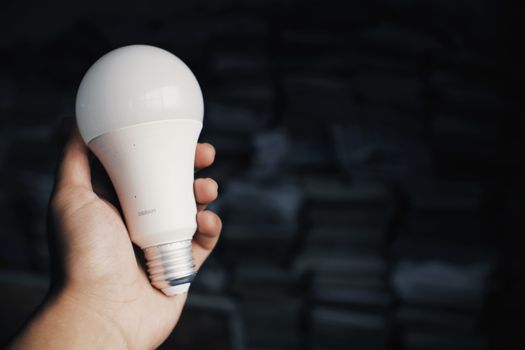
LED stands for Light Emitting Diode, a technology that has transformed the lighting industry by offering dramatic improvements in efficiency. Traditional incandescent bulbs work by heating a filament until it glows, wasting as much as 90% of the energy on heat rather than light. In contrast, LEDs generate light via electroluminescence, using a semiconductor that emits light when an electric current passes through it.
According to the U.S. Department of Energy, ENERGY STAR-certified LED bulbs use at least 75% less energy than incandescent lighting. For example, a typical 60-watt incandescent bulb can be replaced by a 9-watt LED bulb that produces the same amount of light (measured in lumens). This huge difference in wattage translates directly into lower energy consumption and cost over time.
.png)
Moreover, LEDs last much longer than traditional bulbs. While an incandescent lamp may last about 1,000 hours, an LED of similar brightness can run for 15,000 to 25,000 hours. That’s 15 to 25 times longer, reducing replacement costs and environmental impact.
Crunching the Numbers: Real-World Energy and Cost Savings
How much can you actually save by switching to LED lighting? Let’s look at some practical numbers.
Suppose you replace ten 60-watt incandescent bulbs with 10 equivalent 9-watt LED bulbs. Each bulb is used for an average of 3 hours per day. Here’s how the annual energy consumption compares:
- Incandescent: 10 bulbs x 60 watts x 3 hours/day x 365 days = 657,000 watt-hours (657 kWh) per year - LED: 10 bulbs x 9 watts x 3 hours/day x 365 days = 98,550 watt-hours (98.6 kWh) per yearIf the average electricity rate is $0.16 per kWh (the U.S. national average as of 2023), the annual cost is:
- Incandescent: 657 kWh x $0.16 = $105.12 - LED: 98.6 kWh x $0.16 = $15.78That’s a savings of $89.34 per year for just 10 bulbs! Scale that up to more bulbs or longer usage, and the savings increase even further.
Over the lifespan of the LED bulbs (let’s use 15,000 hours), you would save not only on energy but also on replacement costs. You’d need to buy 15 incandescent bulbs (since each lasts around 1,000 hours) for every one LED, adding up to additional savings.
Comparing Lighting Technologies: How Do LEDs Stack Up?
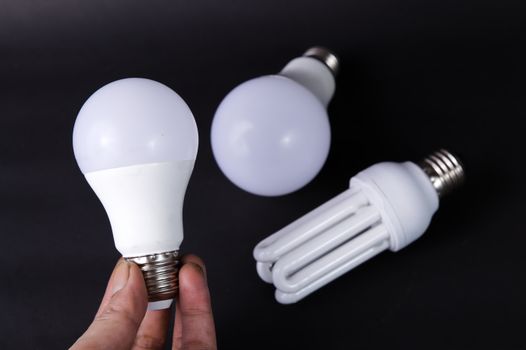
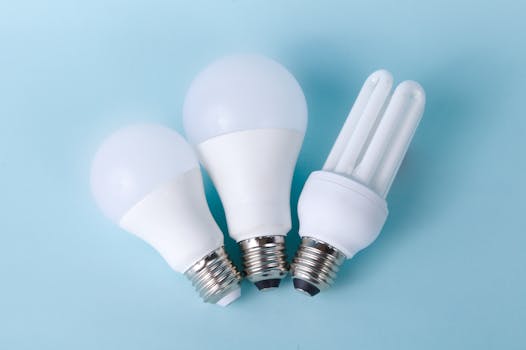
While LEDs offer substantial energy and cost savings, it’s helpful to see how they compare to other lighting options like incandescent and compact fluorescent lamps (CFLs). The table below summarizes key differences.
| Light Type | Wattage for 800 Lumens | Average Lifespan (hours) | Annual Energy Use (3hr/day) | Annual Operating Cost ($0.16/kWh) | Estimated Bulb Cost |
|---|---|---|---|---|---|
| Incandescent | 60W | 1,000 | 65.7 kWh | $10.51 | $1 |
| CFL | 13W | 8,000 | 14.2 kWh | $2.27 | $2 |
| LED | 9W | 15,000 | 9.9 kWh | $1.58 | $3 |
As you can see, LEDs consume the least energy and have the longest lifespan, making them the most cost-effective choice in the long run, even with a slightly higher upfront cost.
Beyond the Bill: Environmental and Maintenance Benefits
The benefits of LED lighting go beyond just financial savings. The reduced energy consumption of LEDs means lower greenhouse gas emissions from power plants. The U.S. Department of Energy estimates that widespread adoption of LED lighting could save about 348 terawatt-hours of electricity in the United States by 2027 — roughly the annual output of 44 large power plants, and equivalent to a savings of over $30 billion at today’s electricity prices.
Additionally, LEDs do not contain mercury, unlike CFLs, which can be hazardous if broken or improperly disposed of. Their durability and cool operation reduce fire risks and make them ideal for a variety of settings, from homes to offices to outdoor environments.
Maintenance is another area where LEDs shine (literally and figuratively). Because they last up to 25,000 hours, you’ll spend far less time and money replacing bulbs, especially in hard-to-reach fixtures or commercial settings where labor costs add up.
Calculating Your Personal Savings: What to Expect at Home
While national statistics are compelling, what about your own home? The actual savings can vary based on how many bulbs you have, their wattage, daily usage, and your local electricity rate. Here’s a simple way to estimate your own potential savings:
1. Count the number of bulbs you plan to replace. 2. Note the wattage of your current bulbs and the wattage of comparable LED replacements. 3. Estimate average daily usage (in hours). 4. Multiply (wattage difference) x (hours/day) x (number of bulbs) x (365 days/year) to get watt-hours saved per year. 5. Divide by 1,000 to convert to kilowatt-hours (kWh). 6. Multiply by your utility rate to find annual dollar savings.For example, if you have 20 bulbs, each replaced from a 60W incandescent to a 9W LED, used for 4 hours a day, at $0.20 per kWh:
Annual savings per bulb: (60W - 9W) x 4 x 365 = 74,460 watt-hours per bulb Total for 20 bulbs: 1,489,200 watt-hours = 1,489 kWh Dollar savings: 1,489 kWh x $0.20 = $297.80 per year
Even accounting for the higher initial cost of LED bulbs, the payback period is typically less than a year for frequently-used lights.
Addressing Common Concerns: Myths and Misconceptions About LEDs
Despite overwhelming evidence in favor of LEDs, some misconceptions persist. Let’s clarify a few:
- “LEDs are too expensive.” While the upfront cost is higher, the rapid decline in LED prices means payback comes quickly. According to EnergySage, the average price of an LED bulb fell by more than 85% between 2010 and 2022. - “LED light quality is poor.” Modern LEDs are available in a wide range of color temperatures and CRI (color rendering index) ratings, providing light that can be as warm and pleasant as traditional bulbs. - “LEDs don’t last as long as advertised.” Many early failures were due to poor-quality products. Reputable brands now routinely deliver bulbs that last 15,000-25,000 hours, provided they are used within their specified temperature and voltage ranges.Final Thoughts: Maximizing Your Energy Savings with LEDs
Switching to LED lighting is one of the simplest, most effective steps you can take to lower your energy bills and reduce your environmental impact. Whether you’re a homeowner, renter, or business operator, the numbers clearly favor LEDs: you’ll use up to 75% less energy, see savings of $50 to $300 annually depending on usage, and spend far less time changing bulbs. As LED technology continues to advance, these benefits will only grow.
If you haven’t already made the switch, now is the perfect time to start. Review your home’s lighting, choose high-quality LEDs, and start watching the savings add up—not just on your electric bill, but in reduced maintenance and a lighter environmental footprint.