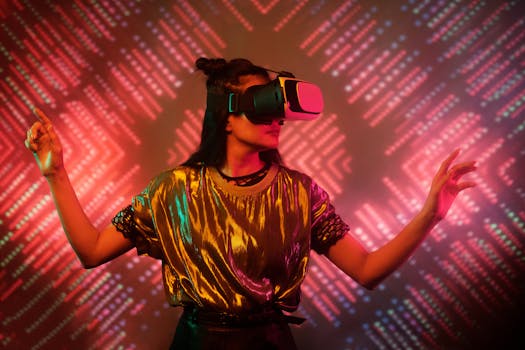
Virtual reality (VR) has revolutionized the way we engage with digital environments, creating immersive experiences that blur the lines between the real and the virtual. A key player in this technological evolution is the Light Emitting Diode (LED), a component whose impact on VR might not be widely recognized but is critically important. This article explores how LEDs facilitate the creation of captivating virtual worlds and discusses their role in the development of VR technology.
LEDs are semiconductor devices that emit light when electric current flows through them. Renowned for their efficiency, longevity, and adaptability, LEDs are employed in various applications, with VR being one of the most innovative. Within the realm of virtual reality, LEDs are utilized chiefly in two areas: VR headsets and tracking systems.
LED Technology in VR Headsets
.png)
Most VR headsets incorporate either OLED (Organic Light Emitting Diode) panels or LED-backlit LCDs (Liquid Crystal Displays) to produce the images that users see. OLEDs, which represent a subset of LED technology, are favored in premium VR headsets due to their superior color contrast and the ability to display true blacks. This capability is crucial for rendering deep and engaging virtual environments. Unlike LCDs, where the backlight can bleed through and lighten blacks, each pixel in an OLED display is self-illuminating. This feature allows for precise control over pixel brightness and color, enhancing the visual detail and realism essential for a high-quality VR experience.
LEDs in VR Tracking Systems
LED technology also plays a pivotal role in the tracking systems integral to VR. These systems track the user’s movements and adjust the virtual environment in real-time, a process essential for a seamless and immersive VR experience. Many VR setups use infrared LEDs to create a spatial reference grid. Cameras outfitted with sensors detect the infrared light, enabling the system to determine the position and orientation of both the headset and controllers accurately. This technology ensures that the virtual environment is responsive and realistic, maintaining the illusion of immersion.
Benefits of Using LEDs in VR
The advantages of integrating LEDs into VR technology are manifold:
- Energy Efficiency: LEDs consume less power than other light sources, an essential feature for battery-powered mobile VR headsets. This efficiency translates into longer battery life, allowing for extended VR sessions.
- Low Latency: LEDs have a high response rate, vital for reducing latency in VR. Lower latency decreases the delay between user actions and system responses, critical for preventing motion sickness and enhancing the realism of the virtual environment.
- Durability: LEDs are robust and have lengthy lifespans, making them ideal for VR headsets, which may be used frequently and intensively. Their durability also presents a cost-effective solution for manufacturers and consumers alike.
The Future of LEDs in VR
As VR technology advances, the role of LEDs is expected to grow and evolve. Ongoing research aimed at boosting LED efficiency and performance may lead to even more realistic and power-efficient VR systems. Emerging technologies, such as micro-LEDs, offer enhanced control over light emission, potentially improving the visual quality of VR displays further.
In conclusion, LEDs are a cornerstone of modern VR systems, significantly influencing both the visual and functional aspects of the technology. Their efficiency, responsiveness, and durability make them well-suited to meet the demands of virtual reality. As the VR landscape continues to expand, the capabilities and applications of LEDs are likely to increase, underscoring their vital role in shaping the future of immersive virtual experiences.