.png)
LED Lights: Towards a Greener Future
In the quest for sustainability and environmental conservation, LED lighting has emerged as a beacon of efficiency and eco-friendliness. As global awareness about environmental issues like climate change and energy waste increases, more people and industries are turning to LED technology as a viable solution to reduce their carbon footprint. This article explores the environmental benefits of LED lights, their efficiency compared to traditional lighting solutions, and the role they play in paving the way towards a greener future.
What Are LED Lights?
LED stands for Light Emitting Diode. Unlike traditional incandescent bulbs that produce light by heating a metal filament until it glows, LEDs create light through a process called electroluminescence. When electric current passes through a microchip, it illuminates the tiny light sources we call LEDs. The result is a more energy-efficient and longer-lasting source of light.
Environmental Benefits of LED Lighting
- Energy Efficiency: LED lights consume significantly less electricity than traditional incandescent and fluorescent lights. Typically, an LED uses up to 75% less energy than an incandescent light bulb and lasts 25 times longer. This dramatic reduction in energy consumption directly translates to decreased fossil fuel usage by power plants, thus lowering greenhouse gas emissions.
- Longer Lifespan: LEDs have a lifespan of up to 50,000 hours compared to 1,200 hours for incandescent bulbs and about 8,000 hours for CFLs. This longevity reduces the need for frequent replacements, thereby minimizing the waste associated with the production, packaging, and disposal of light bulbs.
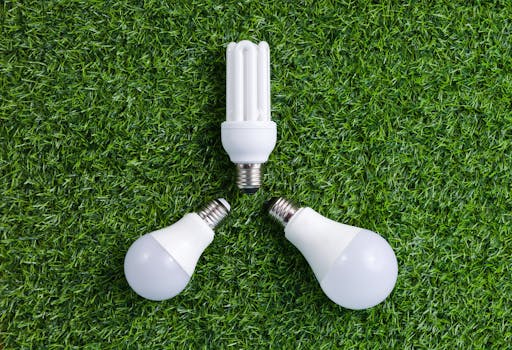
- Reduced Toxic Elements: Unlike fluorescent lighting which contains hazardous materials like mercury, LEDs do not contain toxic materials and are 100% recyclable. This makes them a safer and more environmentally friendly option.
- Less Heat Emission: LEDs emit very little heat compared to incandescent bulbs and CFLs. Incandescent lighting converts over 90% of its energy into heat rather than light, leading to a more significant environmental impact on indoor temperature control and higher energy use through air conditioning.
Impact on Energy Resources
The shift to LED lighting is seen as a critical move in global energy conservation strategies. According to the U.S. Department of Energy, widespread use of LEDs over the next two decades could save about 348 TWh (compared to no LED use) of electricity: This is the equivalent annual electrical output of 44 large electric power plants (1000 megawatts each), and a total savings of more than $30 billion at today's electricity prices.
LED Lights in Smart Technology
The integration of LEDs into smart technology further enhances their energy-saving potential. Smart LED systems can be programmed to turn off when not in use or to adjust their output according to the natural light in the room, which significantly cuts down on unnecessary light usage. Moreover, the ability to control these lights through smartphones and voice-activated devices adds a layer of convenience that promotes their use.
Challenges and Considerations
Despite their benefits, the transition to LED technology is not without challenges. The initial cost of LED lighting is higher than that of traditional light bulbs. However, the cost is offset by the long-term savings in energy bills and replacement costs. There is also the issue of quality variation in LEDs offered by different manufacturers, which can affect consumer trust and adoption rates.
The Future of LED Lighting
As technology advances, the efficiency of LED lights is expected to increase, leading to even greater environmental and economic benefits. Researchers are continually working on improving the quality and capabilities of LED lights, including developing warmer and more pleasant light qualities to enhance user experience.
Conclusion
LED lighting stands out as a powerful tool in the fight against climate change, offering significant environmental benefits by reducing energy consumption, lowering greenhouse gas emissions, and minimizing waste. As more individuals, businesses, and governments recognize the potential of LED technology, its adoption is likely to accelerate, leading us towards a more sustainable and greener future. With ongoing advancements and increased awareness, the role of LED lighting in global environmental strategies is set to become even more pivotal. By making the switch to LEDs, not only can we enjoy lower energy costs and better lighting quality, but we also take an active step in reducing our ecological footprint.